
Last Updated on February 12, 2026 by Vinod Saini
Key Takeaways:
- Learn how, after finishing your master’s degree in hospitality, you can explore various career paths in hotels and resorts, along with luxury brands.
- Find out how a master’s degree improves your chances for lucrative hospitality management roles by developing your leadership skills together with your financial and strategic capabilities.
- Discover prestigious Indian universities that provide outstanding Master’s programs to prepare you for a successful hospitality industry career.
The worldwide expansion of the hospitality industry has created a variety of job opportunities after a master’s in hospitality. The Master’s program in Hospitality Management builds critical leadership skills which equip students to handle broader responsibilities. The program prepares graduates to secure substantial benefits which enable them to transition beyond entry-level positions into influential industry roles. Professionals who hold a Master’s degree in hospitality will find expanded career advancement prospects and increased access to industry positions regardless of their career stage.
What is a Master’s in Hospitality Management?
A Master’s in Hospitality Management represents more than just additional learning. The degree develops both leadership abilities and strategic and specialised skills, which prepare you for advanced positions in a fast-growing industry.
- The Master’s in Hospitality Management degree provides an advanced educational program which broadens your understanding of hospitality and prepares you to lead within the field. The program explores advanced topics including management practices, innovative approaches and business strategy development.
- The curriculum covers hotel and resort management as well as marketing, finance, human resources and operations with specific application to the hospitality field. Numerous programs provide instruction in global trends and sustainability topics
- A bachelor’s degree provides basic skills, but a master’s degree trains students in advanced expertise and leadership skills required for high-paying jobs in hospitality management.
- Master’s programs provide specialisation options including luxury brand management, event management and tourism development as well as food and beverage management. Choosing a specialisation helps you stand out and enables you to secure better career options within this competitive industry.
To advance your career and find multiple job opportunities after a master’s in hospitality, you need to understand the full breadth of what this degree entails.
Why Pursue a Master’s in Hospitality Management?
Understanding why a master’s degree in hospitality is valuable helps you access the best job opportunities after earning a master’s in hospitality. Students who earn a Master’s in Hospitality Management gain better skills and leadership potential along with higher salary prospects compared to those who hold only a bachelor’s degree. The program provides exposure to global industry standards and creates robust networking and internship opportunities, which will advance your career.
Advanced Skills and Leadership Opportunities
- A Master’s degree enables students to expand their foundational understanding while cultivating sophisticated leadership capabilities along with strategic and problem-solving abilities.
- The skills gained from this program enable you to qualify for high-paying jobs in hospitality management with increased responsibility and access to lucrative positions in hospitality management, which are usually beyond the reach of bachelor’s degree holders.
Exposure to International Practices and Research
- Master’s programs typically integrate global case studies and research projects with optional study-abroad programs and internships.
- Global exposure represents a vital element for hospitality professionals who prioritise cultural awareness along with global business expertise.
Networking and Internship Benefits
- Graduate programs establish connections with industry professionals, professors and peers who you can maintain as valuable contacts during your career.
- Through these programs, students gain practical experience during their internships, which frequently result in job offers, thus creating access to various rewarding job opportunities after a master’s in hospitality.
Top Career Opportunities After a Master’s in Hospitality Management
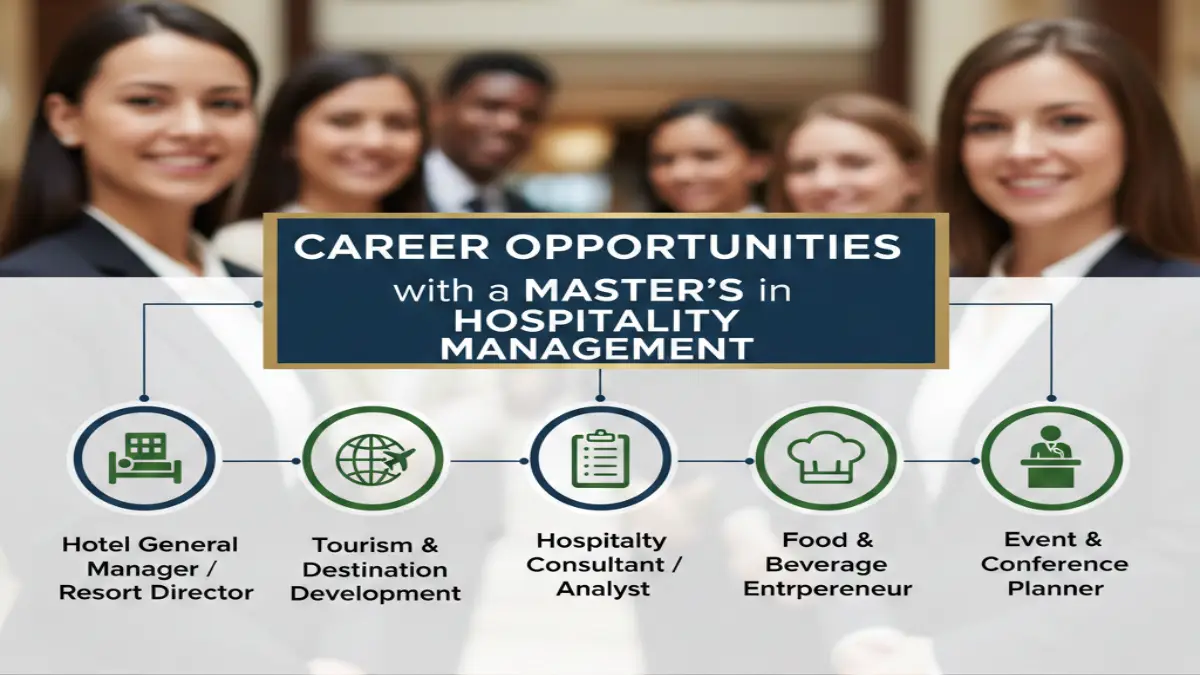
A Master’s in Hospitality Management degree unlocks numerous exciting and fulfilling professional opportunities. You get equipped with superior skills and knowledge, which enable you to succeed in job opportunities after earning a master’s in hospitality. The hospitality industry provides numerous high-paying jobs in hospitality management for those interested in running luxury hotels or managing food and beverage operations, and even entrepreneurs who wish to start their businesses. These represent some of the leading career options available to you.
Hotel General Manager
- Role and Responsibilities: Manage hotel operations for every department, including staff control and budget management to ensure exceptional guest services. The success of the property requires complete accountability from your role.
- Salary Range and Growth Prospects: This position provides competitive salaries and offers extensive career development opportunities in top-class hotels.
Food and Beverage Director
- Managing Operations: Maintain profitable operations through the provision of top-quality dining services and customer satisfaction in hotels and resorts.
- Career Trajectory: The career path in hospitality management regularly provides access to senior executive jobs and specialised consultancy work, which results in high-paying positions within the industry.
Resort Manager
- Unique Aspects: Resort management includes running leisure activities alongside wellness services and guest entertainment on larger properties than hotels.
- Skills Required: Robust organisational skills, together with team management expertise that creates unforgettable guest experiences, are essential.
Event and Conference Manager
- Planning and Managing: Execute corporate conferences, exhibitions, weddings, and additional events flawlessly from beginning to end.
- Key Competencies and Industry Demand: The hospitality sector increasingly requires individuals skilled in project management along with excellent communication abilities and attention to detail.
Hospitality Consultant
- Advising Businesses: Guide hospitality companies to refine their operational processes while boosting guest satisfaction and maximising their profits.
- Typical Clients and Earnings: Consultants support both small boutique hotels and big hotel chains while earning high salaries, which creates strong job demand among master’s graduates in hospitality.
Revenue Manager / Pricing Analyst
- Maximising Profitability: Hotel revenue maximisation requires optimisation of room pricing through market trends and data analytics.
- Growing Importance: The use of technology-driven insights in the hospitality sector enhances both the importance of this position and its salary potential.
Luxury Brand Manager
- Managing High-End Brands: Luxury hotels, resorts and boutique properties need attention on marketing strategies, guest satisfaction and brand positioning.
- Focus Areas: To achieve success in high-paying jobs in hospitality management, you must maintain a consistent premium guest experience.
Entrepreneur / Hospitality Business Owner
- Starting Your Own Business: Many graduates leverage their master’s degree skills to launch hotels, restaurants, or catering businesses.
- Leveraging Master’s Skills: Advanced knowledge in business planning, marketing, and operations helps create a strong foundation for success in entrepreneurship.
Job Market and Demand
- The hospitality industry is growing steadily all over the world, which means there are plenty of job opportunities after a master’s in hospitality management.
- As travel and tourism sectors recover and transform, businesses search for qualified leaders to manage teams and operations efficiently.
- A Master’s degree makes candidates attractive to employers because they provide advanced knowledge along with superior leadership skills and an international outlook, which significantly benefits organisations.
- People who hold advanced degrees paired with relevant experience usually secure high-paying jobs in hospitality management. The fields of luxury brand management, revenue management, and sustainable hospitality have gained popularity while creating exhilarating professional opportunities.
- A Master’s degree both strengthens job security and broadens career advancement opportunities.
Today’s employment landscape favours hospitality graduates with advanced degrees through better job prospects and increased paychecks, coupled with greater responsibilities.
Salary Expectations and Growth Potential
Understanding salary expectations is important when planning your career after a Master’s in Hospitality Management. Here’s what you should know:
- Average salaries vary by role and location, with metropolitan areas generally offering higher pay
- Experience, job location, and company size greatly influence earnings
- Entry-level salaries in India typically start around INR 6-8 lakhs per year
- Leadership roles and specialised positions offer significant salary growth over time
- Career progression often leads to higher pay and more responsibility
- A Master’s degree helps unlock high-paying jobs in hospitality management and long-term growth opportunities
Skills Developed During a Master’s Program That Employers Value
A Master’s in Hospitality Management helps you build important skills that employers appreciate. These skills prepare you to take on bigger roles and make a difference in the hospitality world.
- Through leadership and strategic management, you learn both team guidance techniques and long-term planning methods.
- Understanding financial principles enables you to manage budgets effectively while maintaining cost control.
- Excellent customer service combined with communication abilities enables you to deliver outstanding guest experiences while maintaining effective team collaboration.
- Data-driven learning enables you to make better decisions through factual information.
- In today’s hospitality industry, innovation and sustainability have become essential elements that you learn about.
Developing these skills can open the door to many job opportunities after a master’s in hospitality and help you land high-paying jobs in hospitality management.
Conclusion
Pursuing a Master’s degree in Hospitality Management offers more than a qualification, as it serves as a purposeful investment for career growth. Graduates gain access to exciting job opportunities after earning a master’s in hospitality, including leadership and specialised roles that bring high incomes to the hospitality industry. The knowledge and experience you gain enable you to stand out in a growing and competitive industry. A Master’s degree is necessary for obtaining high-paying jobs in hospitality management. The selected career path mirrors both your enthusiasm for hospitality and your ambition to advance professionally.
FAQS
How long does it take to finish a Master’s degree in Hospitality Management?
The completion time for Master’s programs typically spans one to two years, depending on whether students pursue full-time or part-time schedules.
How can someone enroll in a Master’s program for Hospitality Management if they do not have a bachelor’s degree in this area?
People studying different majors can join many programs by providing work experience relevant to the field or demonstrating a strong interest in hospitality.
Do online Master’s programs exist for students interested in hospitality management?
Multiple reputable institutions deliver Master’s programs through online and hybrid formats to accommodate working professionals’ schedules.
What practical experience opportunities do these programs offer students?
Master’s degree programs include internships alongside industry projects and live case studies to offer practical experience and foster professional connections.
Do hospitality management graduates find demand across international markets or within India specifically?
The global market shows strong demand for hospitality management professionals in regions with high tourism activity, as well as in luxury hospitality and event management industries.