
Last Updated on February 2, 2026 by Vinod Saini
Assume that you want to pursue a career in an occupation that enables you to work with people, travel, and make memories to last a lifetime. You may be interested in being a hotel owner or perhaps a job in event management, tourism, or on a cruise. In the process, you might come across the terms hotel management and hospitality management and wonder why there is a difference. It is difficult to distinguish between hotel management vs hospitality management.
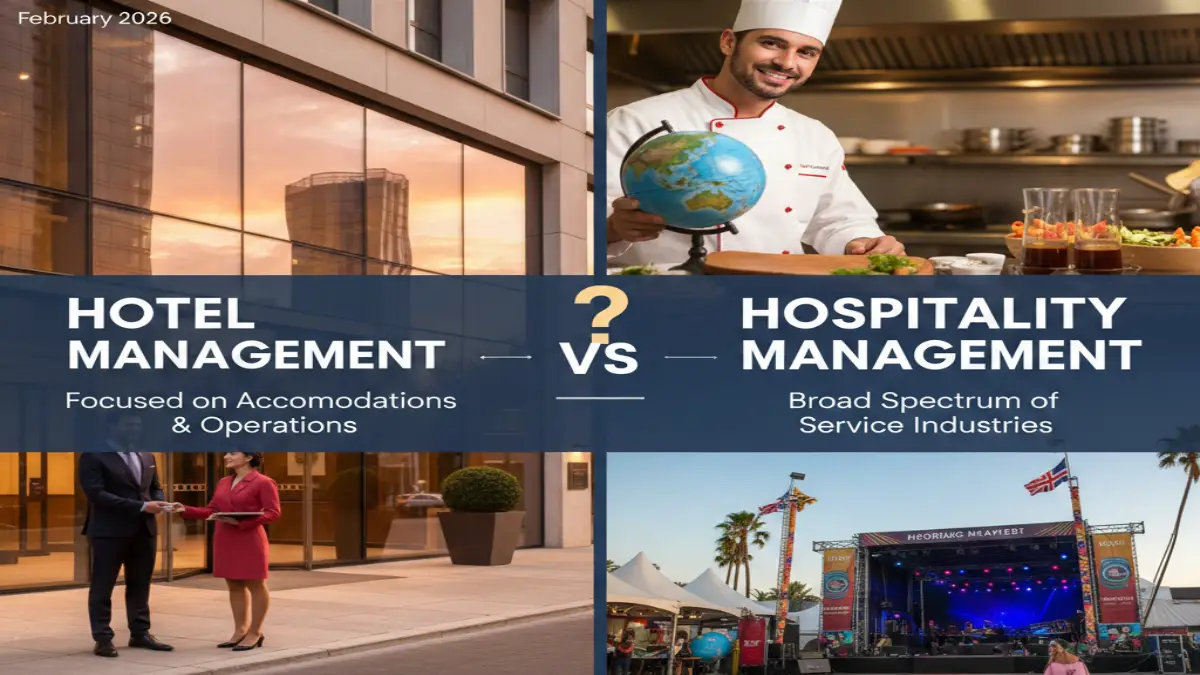
Briefly, hotel management refers to the daily activities of hotels, i.e., reception, catering, and housekeeping. Hospitality management involves a wider field of services, such as event management, leisure businesses, tourism, and travel. One should realise the difference between hospitality and hotel management while selecting a course of study or profession.
In this article, we’ll explore the hotel management curriculum and hospitality management curriculum, compare the hotel management scope with the hospitality management scope, and take a closer look at the kinds of roles available in both hotel management careers and hospitality management careers.
What is Hotel Management?
Ever wondered how hotels run so smoothly? That’s hotel management in action. When others compare hotel management with hospitality management, the primary difference between hotel management and hospitality management is that hotel management is concerned only with hotels, whereas hospitality management deals with services such as restaurants and events.
Core Focus
Hotel Management is concerned with the workings of hotels and other similar accommodation establishments. Although the hospitality management scope encompasses topics such as travel, events, and tourism, the hotel management scope is more narrow in focus, concerning how hotels operate on a daily basis.
Key Responsibilities
People working in hotel management typically handle:
- Front Office Operations – managing reservations, check-ins and check-outs, and guest enquiries
- Housekeeping and Maintenance – keeping rooms and facilities clean, comfortable, and safe
- Food and Beverage Management – overseeing restaurants, bars, room service, and banquets within the hotel
- Sales and Marketing – promoting hotel services and attracting guests through various campaigns
- Revenue Management – setting room rates and managing occupancy to boost profitability
- Human Resources – recruiting, training, and supporting hotel staff
- Financial Management – preparing budgets, monitoring expenses, and ensuring the hotel remains financially healthy
Scope of Roles
The hotel management scope includes a wide range of roles. Some common hotel management careers include:
- Front Office Manager
- Executive Housekeeper
- Food & Beverage Manager
- Hotel Operations Manager
- Rooms Division Manager
- Hotel General Manager
Skills Required
To thrive in hotel management, some essential skills include:
- Organisational skills and attention to detail
- Communication and leadership abilities
- Problem-solving and quick decision-making
- Guest service orientation
- Financial understanding specific to hotel operations
Educational Pathways in India
There are a number of courses and degrees that come under the hotel management program for those who want to pursue this profession. These normally have internships and fieldwork as part of the coursework.
Popular qualifications include:
- Bachelor of Hotel Management (BHM)
- Diploma in Hotel Management
- Certificate courses in specific areas, like food production or housekeeping
Top institutions in India offering these programmes include:
- NIPS School of Hotel Management, Kolkata
- Institute of Hotel Management (IHM) – multiple branches across India
- Welcomgroup Graduate School of Hotel Administration, Manipal
- Christ University, Bengaluru
- SRM Institute of Hotel Management, Chennai
While these courses focus specifically on hotel operations, those interested in broader hospitality management careers may explore degrees that include the wider hospitality management curriculum, which we’ll explore in the next section.
What is Hospitality Management?
If you have ever fantasised about planning events, working on a cruise line, or running an expensive hotel, hospitality management could be in your future. Hotel management vs hospitality management is what everyone’s talking about, and the biggest difference between hotel management and hospitality management is that hotel management is all about managing hotels, while hospitality management entails more diverse guest experiences from various industries.
A Broader Perspective
Hospitality management includes not only hotels but also a wide range of businesses that revolve around creating memorable customer experiences. The hospitality management scope stretches far beyond hotel walls.
Key Sectors Included
Professionals in hospitality management may work in:
- Lodging – hotels, resorts, and bed & breakfasts
- Food and Drink – for example, restaurants, cafés, pubs, and catering facilities
- Tourism and Travel – airlines, travel agencies, tour operators
- Event Management – such as corporate conventions, festivals, weddings, and trade shows
- Recreational and Leisure activities like theme parks, cruise ships, spas, and casinos
Key Responsibilities
Given its wide reach, roles in hospitality management can vary a lot. Common responsibilities include:
- Managing customer experiences across different platforms and settings
- Creating and executing marketing and sales strategies tailored to various hospitality sectors
- Overseeing revenue and pricing models for different types of services
- Handling human resources in diverse cultural and business environments
- Leading strategic planning and expansion for hospitality brands
- Navigating tourism laws, policies, and international regulations
Scope of Roles
The hospitality management scope opens doors to a wide variety of roles. Some typical hospitality management careers include:
- Event Planner
- Restaurant or Bar Manager
- Tourism Manager
- Airline Operations Manager
- Hospitality Consultant
- Cruise Director
- Resort Manager
These roles can take you across industries and even around the world, depending on your interests.
Skills Required
One of the great strengths of hospitality management careers is the need for transferable skills. People in this field often develop:
- Strong leadership and decision-making abilities
- Strategic thinking and planning skills
- Excellent customer relationship management
- Clear and confident communication
- Flexibility and adaptability
- Cultural awareness for working in global or multicultural settings
These skills make hospitality graduates valuable in many different sectors.
Educational Pathways in India
Those interested in a broader hospitality career can explore degrees such as:
- Bachelor of Hospitality Management
- Bachelor of Tourism and Travel Management
- Bachelor of Event Management
- Diploma and certificate programmes in hospitality and tourism
Some of the institutions in India that offer these programmes include:
- NIPS School of Hotel Management, Kolkata
- Indian Institute of Tourism and Travel Management (IITTM)
- Amity University
- Christ University, Bengaluru
- Institute of Hotel Management (IHM), with specialisations in hospitality
These programmes cover a wider hospitality management curriculum, helping students build skills that apply to a range of customer-oriented businesses, not just hotels.
Key Differences Between Hotel Management and Hospitality Management Summarised
When considering hotel management vs hospitality management, it is worth understanding the most significant differences so you can select the most appropriate direction for your studies and career. Here’s the easy breakdown covering the essentials:
- Scope – The hotel management scope is more specialised and only concerned with hotels, resorts, and accommodations. The area of management which includes restaurants, events, tourism, travel, leisure and a lot more is known as hospitality management.
- Focus – One of the fields of hotel management is hotel operations management, which deals with day-to-day activities such as guest services, food and beverage, and housekeeping. Hospitality management takes a wider look at improving its customers’ overall experience across many industries.
- Career Paths – Hotel management careers are typically considered to be roles such as Front Office Manager, Executive Housekeeper or Manager, or Hotel General Manager. In the meantime, careers in hospitality management can include ones in Event Planning, Tourism Management, Restaurant Management, or Hospitality Consulting.
- Curriculum – The hotel management curriculum is specific to hotel operational knowledge. The hospitality management curriculum includes information about many of the same topics explored in hotel management, but also includes more general business topics such as strategic planning, marketing, and tourism policies.
- Skill Emphasis – The hotel management subject area emphasises operational and organisational skills, focusing specifically on hotel operations, while hospitality management focuses on strategic, adaptable, and transferable skills pertinent across the overall scope of the hospitality industry.
An understanding of these distinctions will enable you to reflect on the right course and career route for your interests and career objectives.
What Hotel and Hospitality Management Have in Common
Although there are clear differences between hotel management and hospitality management, it is equally important to understand the similarities. Several core components will be important to success in any field:
- Customer service is a massive component of success in the hotel management and hospitality management fields. Regardless of whether you are working at the front desk of a hotel or orchestrating a major conference, you will be working to make the guests feel welcomed and appreciated.
- Both hotel management and hospitality management are based on principles of management since both fields require that you are able to plan, organise and lead a team, regardless of whether you are managing just a hotel or a larger hospitality business.
- Solid communication and interpersonal skills are both critical in those fields as you have to function with guests, staff, and vendors and require the ability to communicate properly and with empathy for everyone to find common ground and cooperate.
These shared components demonstrate why some elements of the hotel management curriculum and the hospitality management curriculum often overlap and provide students with the skills needed in successful hotel management careers and successful hospitality careers.
Which Path is Right for You?
Ultimately, it comes down to what is right for you: what piques your interest, whether hotel management or hospitality management, what motivates you, and whether the position fits in with your personal experiences and goals. The following are a few things to think about:
- If Hotel Management appeals to you:
- You enjoy the idea of working behind the scenes in hotels or resorts.
- You’re detail-oriented and like a clear, structured environment.
- You get satisfaction from making sure guests have a comfortable and seamless stay.
- If Hospitality Management appeals to you:
- You’re interested in a wider range of service industries beyond just hotels.
- You like thinking strategically and enjoy a mix of challenges.
- You want diverse career options and enjoy connecting with lots of different people.
Conclusion
Ultimately, hotel management and hospitality management diverge in their scope and concentration. Hotel management involves a more restricted focus concerning the operational side of the activities of all hotels and accommodations, while hospitality management covers a wider range of directions, like tourism, events, food services, etc. Knowing the distinctions between hotel management and hospitality management enables you to identify which particular area aligns with your interests and skills.
Both choices will have thrilling and fulfilling career opportunities in hotel management and hospitality management, and each will have its own unique challenges and benefits. Researching the hotel management curriculum and hospitality management curriculum can provide you with further insight into the skills and competencies you will develop within each program.
The hospitality industry carries an abundance of opportunities. When going down a single avenue, operating a hotel or building a varied range of careers within the broader hospitality industry, there are countless opportunities to build, progress, and create a rewarding and sustainable professional career.
Frequently Asked Questions:
What is the major difference between Hospitality Management and Hotel Management?
Hotel Management is a niche industry targeting hotels and accommodation, whereas Hospitality Management is more general, encompassing tourism, events, restaurants, etc.
In terms of career, which option has more diversity, Hotel Management or Hospitality Management?
Hospitality Management has a broader range of career opportunities, covering all segments of the service industry, where travel, events, food services, and recreation are only a few examples.
How do I choose between Hotel Management or Hospitality Management to study?
Select Hotel Management if you want to work in an aspect of business devoted to managing hotels. Select Hospitality Management if you want to study a component of the service industry that offers more variety and career options.